
Inside EA’s Playbook: Monica Dinsmore on Cross-Title Strategy, Mobile Growth, and the “Esports Spring”

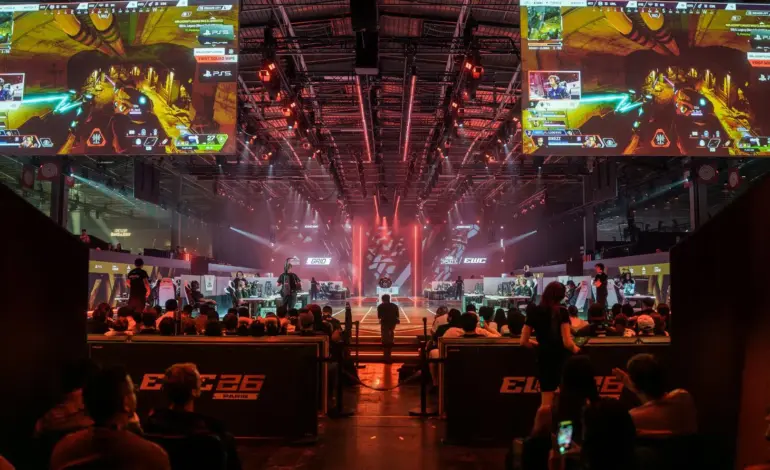
The Esports World Cup (EWC) is in full swing, and Electronic Arts (EA) has established itself as one of the most dominant publishers on the ground. From the sold-out, high-drama Apex Legends Global Series (ALGS) Split 1 Playoffs to a massive EA FC tournament drawing over 500 hopefuls fighting for a slice of a $1,000,000 prize pool, EA’s footprint is massive.
During the action, EA’s Head of Esports, Monica Dinsmore, sat down with Esports Insider to discuss how the publisher is dismantling traditional title silos, bridging the gap between digital and physical sports, pushing into mobile, and ushering in what she calls the “esports spring.”
Here are the key takeaways from the conversation, compiled for the Aria Esport community.
1. Dismantling the Silos: EA’s Cross-Title Strategy
Managing a competitive ecosystem that spans from tactical battle royales (Apex Legends) to traditional sports simulators (EA FC) is no easy task. Dinsmore explained that EA’s day-to-day operations rely on a hybrid team structure of broad functional experts and deep-dive specialists.
-
The Shared Layer: Functional departments—like marketing, league operations, PR, and social media—span across multiple games. This allows teams to share best practices, scale operations, and learn from one title’s success to elevate another.
-
The Dedicated Layer: Beneath the shared functions sit the specialists. These are the people who live and breathe the specific rules, meta, and community nuances of Apex or EA FC, ensuring that content and competitive integrity always align with what the core fanbase wants.
2. The Intersection of Gaming and Real-World Sports
One of the most fascinating trends in modern entertainment is how video games are becoming the primary gateway to traditional sports for younger generations.
According to Dinsmore, games like EA FC teach younger fans the rules, positions, and rosters of real-world football long before they ever watch a live match. This digital-first fandom has opened up unprecedented opportunities for physical-digital crossovers:
“Those are very unique and special to EA Sports, [like] showing up at the NFL Super Bowl alongside everything that’s going on… We’ve talked about the World Cup and that experience of fandom that’s just rabid across countries… It’s something that I think we can get to. It’s a great target for the future of esports.”
A prime example of this synergy is the eChampions League, where the virtual champion is awarded their trophy directly on the pitch of the real-world Champions League final.
3. The Shift from “Esports Winter” to “Esports Spring”
After a couple of turbulent years for the competitive gaming industry—often dubbed the “esports winter”—Dinsmore is incredibly optimistic about where the scene is heading.
When asked about the evidence for this newfound “esports spring,” she pointed directly to the sheer scale of investment and passion on display at the Esports World Cup:
-
Global Collaboration: Major AAA publishers, municipal partners (like the city of Paris), and international organizations are actively cooperating to deliver massive fan-fests and highly polished broadcast experiences.
-
In-Game Integration: EA is working closer than ever with its development teams to weave competitive milestones directly into the game clients via better drops and in-game esports hubs.
-
Maturing Partnerships: Successful regional events—like the ALGS partnership with Sapporo, Japan—show that the competitive scene is evolving from basic tournaments into full-scale regional festivals.
4. What’s Next: Mobile Gaming and Globalizing US Sports
Looking to the future, EA’s next massive growth driver is mobile, specifically FC Pro Mobile.
Recognizing that regions like Asia are overwhelmingly mobile-first, EA is using a “test-and-learn” approach. They are starting with local community festivals and competitive stages in Asia, with the ultimate goal of scaling FC Pro Mobile into a global ecosystem that mirrors their successful PC and console leagues.
Additionally, Dinsmore expressed a strong desire to expand EA’s regional titles—like Madden and College Football—onto the global esports stage:
“I always want to do more… I’d love to bring Madden here. I would love the day that the French fans are demanding that Madden or College Football show up on the global stage.”
As traditional sports leagues like the NFL continue to play more physical games in Europe, EA plans to ride that wave, using virtual gridiron action to build global fandom.
6 Comments
Hello,
The digital landscape is evolving rapidly, and I noticed Ariaesport could benefit from several modern marketing approaches.
Areas worth exploring:
• AI-powered customer service chatbots
• Automated lead nurturing workflows
• Predictive analytics for customer targeting
• Omnichannel marketing integration
• Personalization engine implementation
I’d love to share a digital maturity assessment for ariaesport.com. It highlights where technology can drive the most value.
Shall we connect?
Best,
Danish
Digital Transformation Specialist
+19137357607 | @Professionals_experts_bot
🪙 (1) MESSAGE for you №X3779 OPEN ->> graph.org/Cloud-Mining-08-27?hs=209129e11133bd0ada390ceeef61b895& 🪙
📉 New Message from Coinbase. OPEN > graph.org/YOU-HAVE-A-NEW-BITCOIN-TRANSFER-FROM-COINBASE-08-27?hs=209129e11133bd0ada390ceeef61b895& @BX2999 📉
💴 New Message from Coinbase. READ ⭐➤ graph.org/YOU-HAVE-A-NEW-BITCOIN-TRANSFER-FROM-COINBASE-08-27?hs=209129e11133bd0ada390ceeef61b895& №SF0291 💴
📉 You have (1) MESSAGE #U2689 CONTINUE >>> graph.org/Bitcoin-Cloud-Mining-08-27?hs=209129e11133bd0ada390ceeef61b895& 📉
🏦 New Message from Coinbase. OPEN → graph.org/YOU-HAVE-A-NEW-BITCOIN-TRANSFER-FROM-COINBASE-08-27?hs=209129e11133bd0ada390ceeef61b895& #JI8476 🏦